

Minnesota Avenue
aka The Haunted House
The House That Started It All
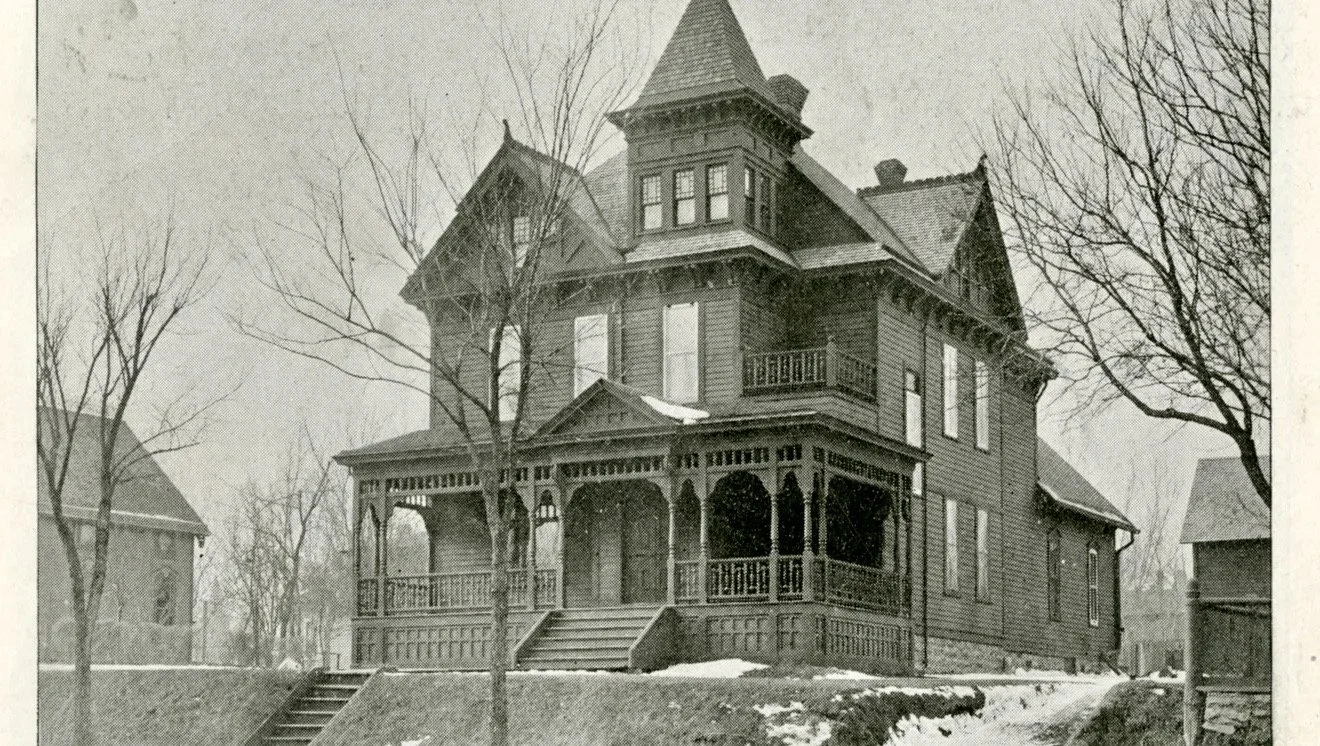
Above: The newly-built home in 1887.
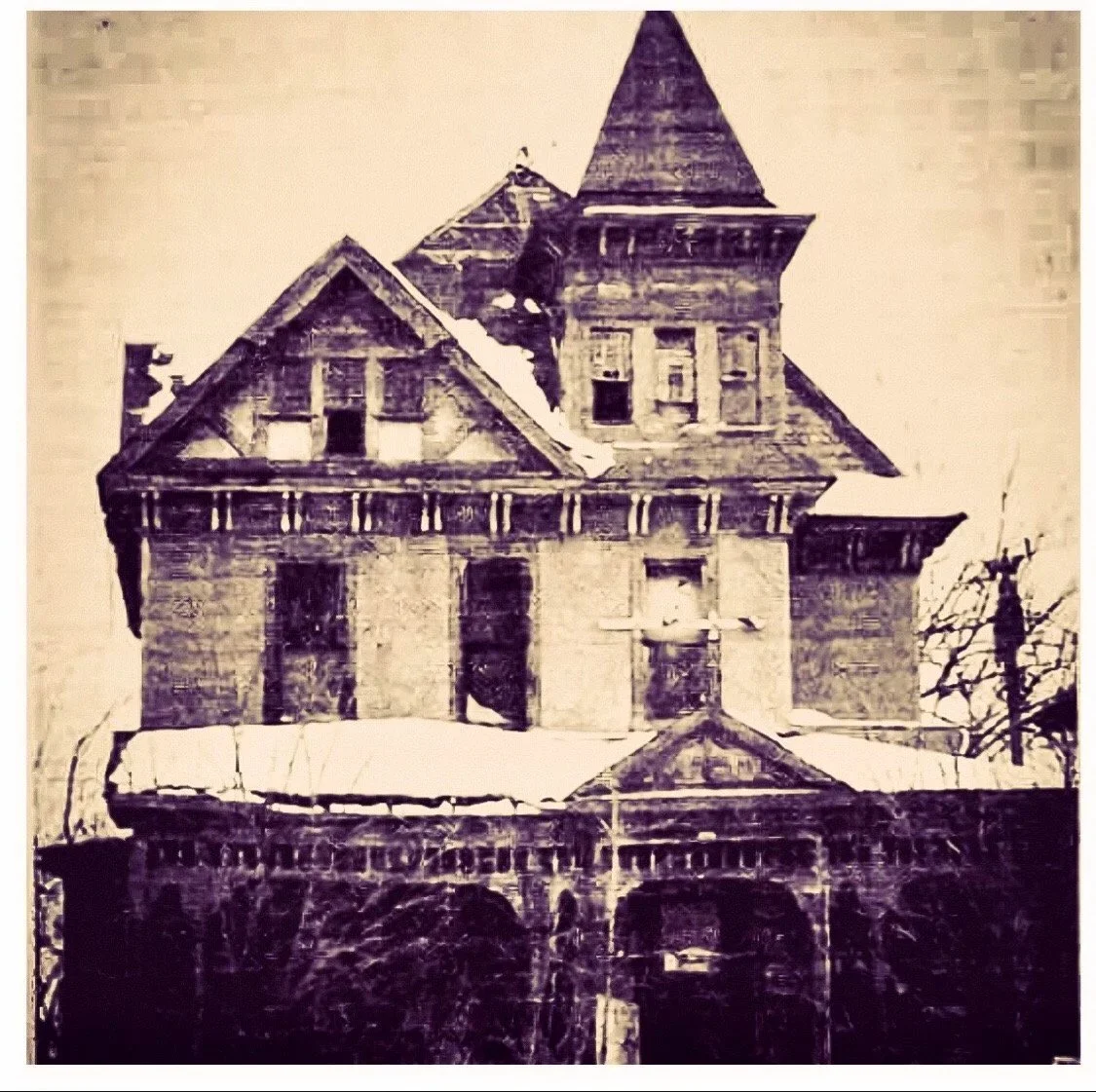
Below: The spooky house it became in the 1970s and 1980s.
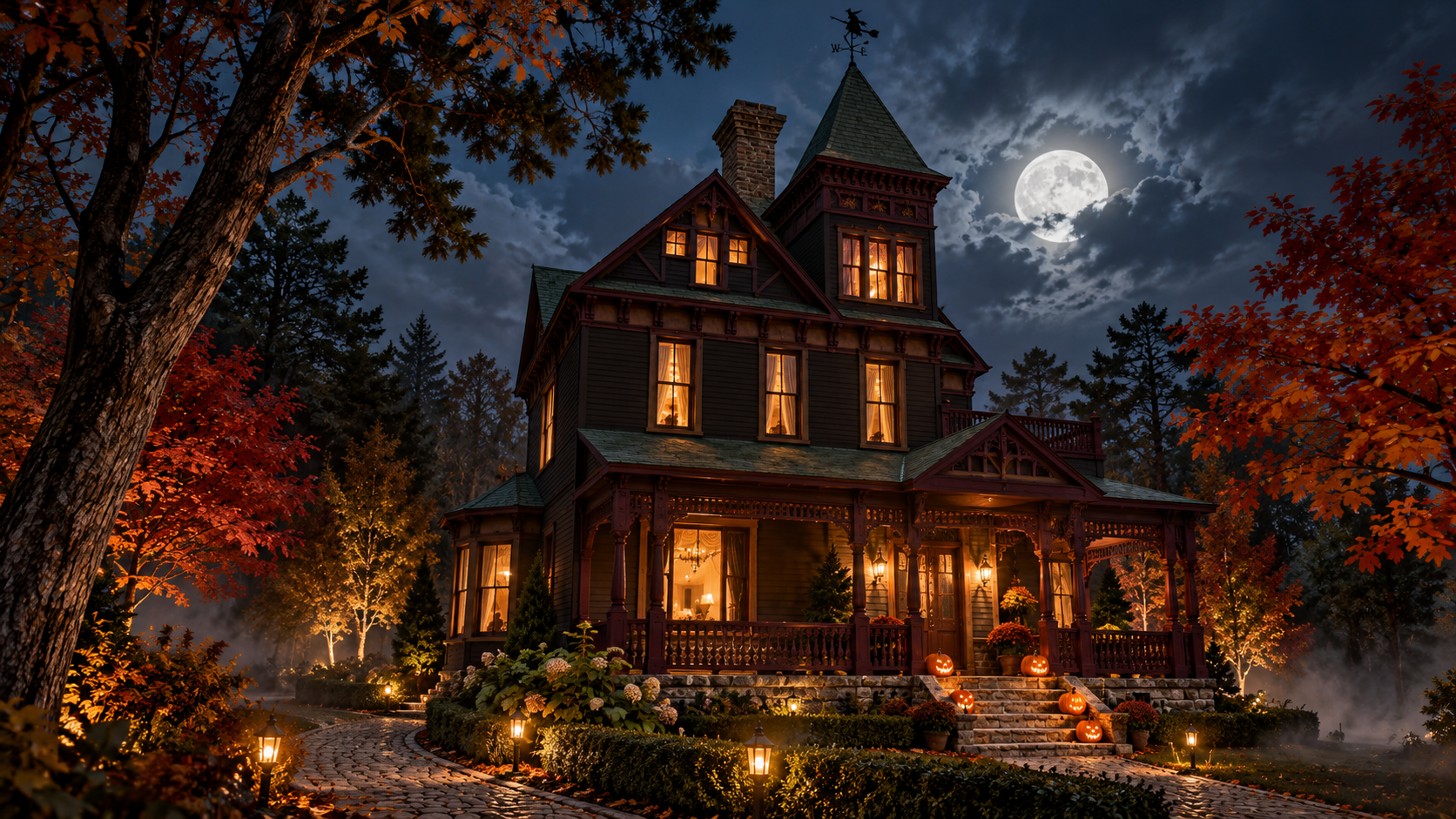
The haunted house recreated
Every Tuesday night on the way to karate class at the YMCA, my mother drove down Minnesota Avenue in Sioux Falls, South Dakota, the town I called home until I was twelve. I always watched for the same house. It was a spooky old house with a tower, steep gables, and an ornate porch. The windows were busted out, the roof was caving in and a red light glowed in the attic windows. I was fascinated by the place and wanted to live there someday.
The house was built in 1887 at 415 South Minnesota Avenue in what was called Grigsby’s Addition at the time. George W. Abbott bought it in 1891, when it was four years old. He was its longest-serving owner, raising four children there with his wife, Mary, and living in the house for 48 years until his death on Christmas Day in 1939. Mary stayed until her death in 1956. Their eldest son, George Jr., took over and tried to rent it out. The house was so large though, steady tenants were hard to find, so at one point it was divided up into smaller units. George Jr. kept the property until 1970. Afterward, it stood vacant and fell into disrepair.
In the early 1970s, Jaycees chapters around the country began organizing haunted houses as a safe Halloween alternative that could also benefit their communities. Sioux Falls had reported little Halloween vandalism, but the local chapter saw a reason to give kids and adults something fun to do before it became a problem. The old Abbott house was an obvious choice. As then Mayor Rick Knobe put it, “It has got to be the spookiest-looking house in town.”
The first Sioux Falls Jaycees haunted house opened in 1974. About a hundred volunteers worked on the event each year, with committees for sound, lighting, costumes, and makeup. The first year cost about $2,500. The Jaycees broke even and made it an annual event.
The public tours ran October 28 through 31, with a special opening on the 27th for students from what was then called the Crippled Children’s School and from the School for the Deaf. Organizers expected a thousand visitors a night. Some 1,250 people turned out, with the line stretching three to four blocks. The tour used thirteen rooms, each with one door to enter and another to exit, so groups could keep moving.
The theatrics soon spilled out onto the street. The following year, each evening began with an old hearse delivering Dracula’s coffin. The tours started once the coffin was carried inside. In 1978, the Jaycees staged the capture of a swamp monster. In 1979, Dracula arrived by hot air balloon, only for a freak gust to force a landing in Tuthill Park, on the other side of town. The Jaycees hurried him back to the house on Minnesota Avenue before he could feast on any local necks. It was all in the name of community service.
The house sat empty the rest of the year, and I made it inside only once. My grandfather took me to the haunted house event in 1985, just after my seventh birthday. I remember the cold and waiting in line for at least an hour. We made it halfway through the tour, as far as the staircase that led upstairs. The moment I realized we had to go up there, I freaked out. My grandfather and I bailed, and he promised to bring me back when I was older. As it turned out, that was the final haunted house I’d ever get to see there.
In August 1987, the Abbott house burned down. The fire department suspected the blaze had been started by kids who had broken inside. What remained was torn down, and the site became a parking lot for the nearby church.
Shortly afterward, I decided I wanted to become an architect. In support of my newfound interest, my parents set me up with a drafting table and design reference materials. I later went on to study architecture at the University of Nebraska-Lincoln. The first house I designed for myself drew on the old haunted house and inspired later designs, such as The Alta Torre and The Pacifica, which I’ve featured on this website. I’ve always wanted a grand old house that looks somewhat spooky and intriguing on the outside, yet is beautiful and comfortable to live in on the inside.
During the pandemic, while reconnecting with my architecture roots and teaching myself on various architectural design software, I returned to the Abbott house as a project. I pieced together a 3D model using old photographs, historical house plans, and what I could remember of the rooms I’d seen with my grandfather. I even considered writing to the Argus Leader, Sioux Falls’ local newspaper, to propose rebuilding it on its original site. It could house the local historic preservation society and become a haunted house again for five days out of the year during Halloween.
I never did send that letter. I did, however, turn the model into a series of renderings, and through them I’ve finally had a chance to spend time in the house I used to watch from the car window.
Above: A 3D rendering I made of the house while teaching myself various architecture rendering software.
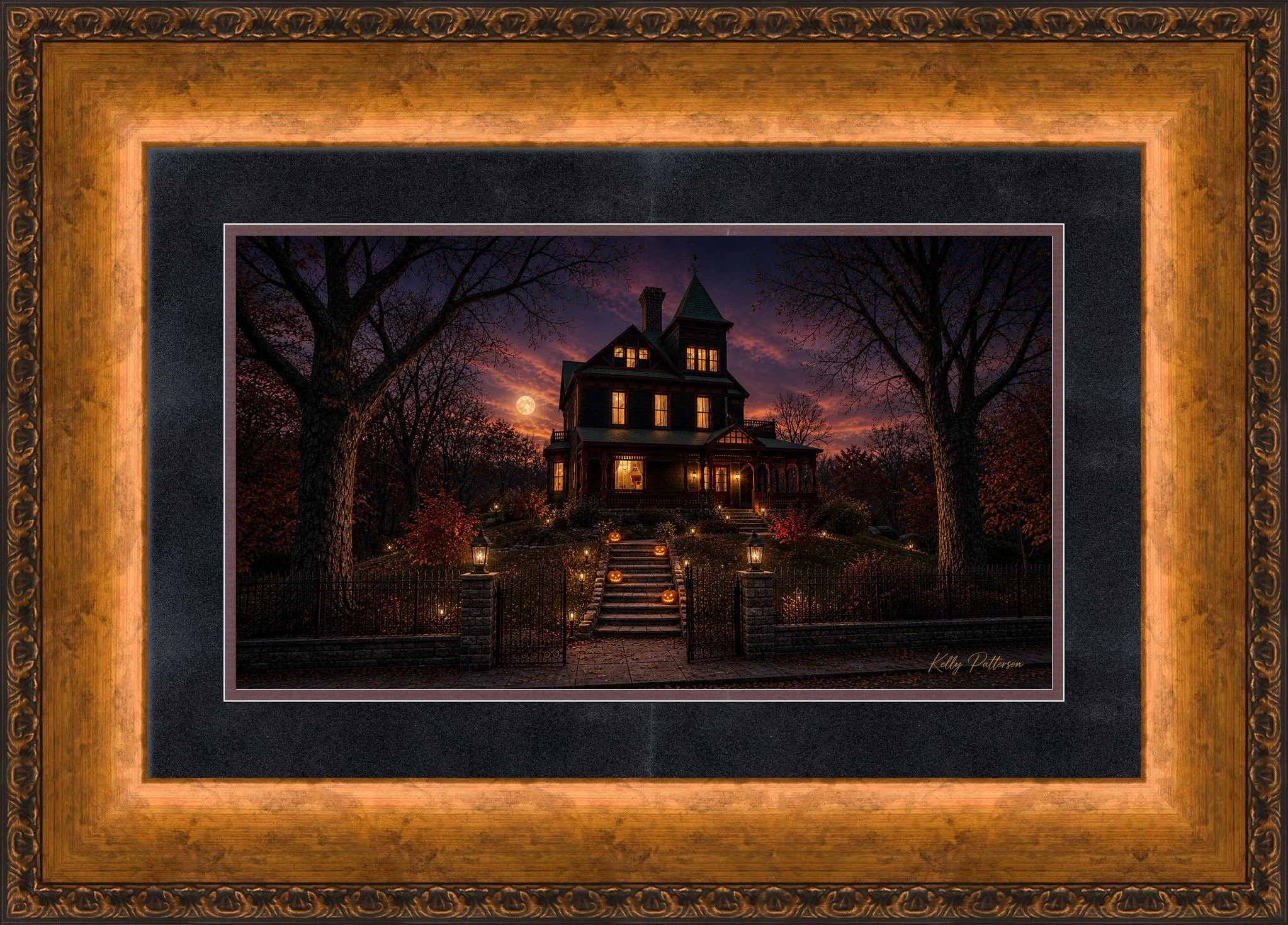
Below: Original artwork I’ve created based on the old haunted house.